
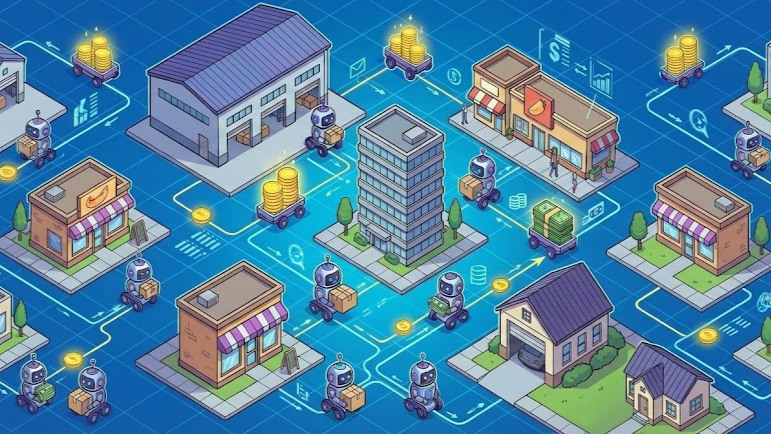

B2B Agentic Commerce Will Dominate 2026
The clearest signal from 2025 is this: agentic commerce is already here, and it didn’t start with consumers.
Based on the agent-driven purchase journeys we analyze every day, the future of agentic commerce isn’t chatbots placing orders for people. It’s businesses allowing software to transact on their behalf: invisibly, dynamically, and at scale.
That reality diverges sharply from the popular narratives about how agentic commerce is supposed to emerge, and it changes how companies should be preparing for 2026.
What our data says
At Spec, we now analyze thousands of legitimate agent-driven purchase journeys every day, sometimes a lot more. Real transactions, real dollars. Where these come from break down into three primary categories:
- Businesses that used to rely on brittle bots.
- Businesses that can't exist without agentic scaling.
- Unannounced AI projects from social networks.
Almost all of this volume is B2B. Let’s cover all three:
#1: Businesses that used to rely on brittle bots
These type of businesses aren't new; we’re talking about ticket scalpers, fashion resellers, and consumer arbitrage. Their operations used to rely on bots that would get snarled up by application changes and overzealous defenses - even though they were submitting good transactions the merchant wasn’t actually trying to stop. I use business loosely, some of these are hobbiests that might resell 1,000 items a year, some are large operations moving $10M+ in good clean GMV.
These businesses often try to bypass limits on things like purchasing, returns, or promo-code redemption, which in a pre-agentic world requires constant tweaking. Instead of keeping up this hand-to-hand battle, these reseller businesses have moved to agent-controlled automation that automatically adjusts to get the outcome they need. They now present as human and fall into a category we’ve taken to calling “ghost agents.”
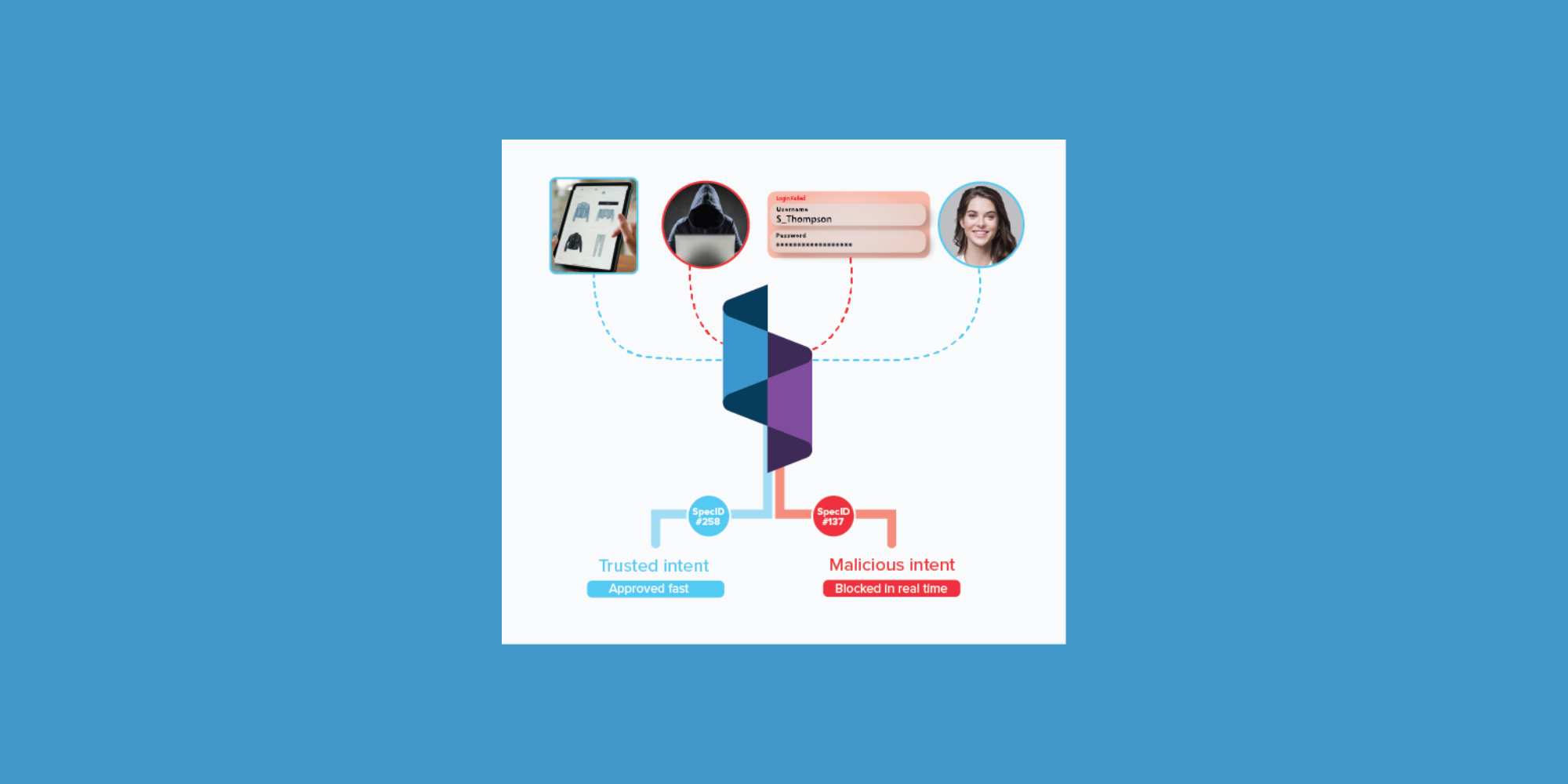
It is not unusual for us to see these agents browse and buy from the merchants we protect on behalf of dozens of customers at a time. We get involved to separate the good agent purchases from the bad ones, and to keep the good ones operating inside limits the merchants define.
#2: Businesses that can't exist without agentic scaling
There’s a lot of fraud and fraud-adjacent businesses in this active agentic commerce category.
eCommerce Triangulators
Many of these are scammy e-commerce sites that have been vibe-coded into place. They buy products from the actual retailer after the consumer buys the product from their site, which sometimes impersonates the actual retailer, and other times just presents itself as a "secret deals" site. This is called triangulation - the consumer buys from Business A, then Business A buys retail from Business B to fulfill the consumer's order.
Marketplace sellers on eBay have been doing this for years; you've experienced this if you've ever bought a product on eBay, only to have it delivered to you by Amazon.
This hits a little different because the triangulator is taking real credit card information and has a scary level of control on how that card gets used. There’s nothing preventing these businesses from fraudulently impersonating retailers or abusing the credit card information - as far as the card brands and banks are concerned, the triangulators are invisible in this flow and not merchants of record.
Marketplace Businesses
We also see agentic purchasing in traditional marketplace activity all the time, where large sellers and groups of buyers are controlled by a single business through the use of agents - something that was too complex to do well with bots and or human teams.
Much of this is legitimate: imagine large rental operations, gig worker teams, and large resale operations. While these businesses are often net-positive for the platform, their actions have disproportionate power to quickly distort or harm the integrity of a marketplace if not kept in check.
#3: Unannounced AI projects from social networks
This last type of B2B transaction is the newest, and I think the most telling of where agentic commerce will have the biggest initial impact on worldwide commerce.
Our platform is monitoring the big social networks as they launch agentic commerce tests, their agents doing real transactions against some of the merchants we protect. These are the social networks and chat apps where people spend much of their time today.
What these tests look like:
- Consumers see a post, reel, or advertisement on a social network or chat app.
- The social network puts together a multi-merchant “cart” on their behalf based on that content and offers to check out on the user’s behalf without leaving the social network.
If true, this would be a game changer for advertisers, merchants, and the state of online commerce as we know it.
Agentic commerce enables a social network to capture the complete commerce cycle.
- They already own attention.
- They already own discovery.
- With agents, they own activation, the moment where interest turns into a transaction.
Agentic workflows make that possible:
- See an outfit in a reel → agent manages carts on their behalf → user makes one tap.
- See a kitchen redesign post → agent assembles all SKUs across multiple merchants.
- See a travel video → agent builds the itinerary, pricing, and booking flow.
Why social networks?
- They want to be the merchant-of-record-adjacent layer. Not the seller, but the orchestrator who captures the commission. They're already running huge ad networks to do this. Agentic commerce is a multi-billion dollar opportunity that allows them to cut out the middleman.
- They don’t want clicks leaving the platform. They want outcomes to happen inside the ecosystem. Better for them and gives them ironclad visibility into which activations truly convert.
- They can stimulate buying moments with content. Agentic commerce rewards whoever creates demand the fastest, not whoever runs the best storefront.
Why will this work?
This business model already exists: Travel aggregators have been doing this for years.
Today, businesses like Expedia and Booking can complete carts sourced from thousands of travel and hospitality providers, think: flights, rental cars, hotels, and experiences.
Agentic commerce allows a platform like Instagram to do the exact same thing for virtually anything that can be bought or booked online. Since users are already on these social networks, this business model is even better because they aren't paying for customer acquisition costs or partnership overhead like the travel aggregators are.
What does 2025 data tell us about 2026 and beyond?
The data we’ve seen points to a clear ground truth in agentic commerce. The familiar ecommerce-style vision, where merchants, banks, cardholders, AI apps, CDNs, and trust providers all align behind shared protocols to make “buying things with chatbots instead of websites” work, still feels like a future state that may or may not hit broad consumer and merchant adoption.
What seems far more likely is that the dominant form of consumer-facing agentic commerce does not look like websites or chatbots at all.
What we actually saw throughout 2025 was something different: businesses using agentic workflows to fully capture and control consumer demand, turning upstream retail businesses into suppliers rather than destinations. That model already works. And because it already works, it is not hard to predict what happens next.
In 2026, we will see much more of it, until it reaches a scale that is simply too large to ignore.
--
Ready to See What the Agents Are Doing on Your Platform?
If you’re seeing unexplained traffic patterns, suspicious repeat behavior, or automation slipping through, it’s time to look deeper.
Spec helps fraud and product teams see every click, request, and behavior in context so you can tell whether it’s a customer, a helper, or an adversary.
Talk to our team about mapping agentic traffic on your platform and stopping what your current tools can’t see.
Ready to get started with Spec?
Nate Kharrl, CEO and co-founder at Spec, has built leading solutions for application security and fraud challenges since the early days of the cloud era. Drawing from his cyber experience at Akamai, ThreatMetrix, and eBay, Nate helped found Spec to focus on the needs of businesses operating in a landscape of increasing AI risks. Under Nate’s leadership, Spec grew from its mid-pandemic founding to raise $30M in venture-backed funding to build solutions used by Fortune 500 companies transacting billions in online commerce. Spec’s service offerings today include protective measures for websites and APIs that specialize in defending against attacks designed to bypass bot defenses and risk assessment platforms.
Frequently Asked Questions

“With Spec, we can mitigate fraudulent activity, protect our revenue, and create a better user experience so that Indiegogo can remain a trusted crowdsourcing platform.”

Payments Manager
